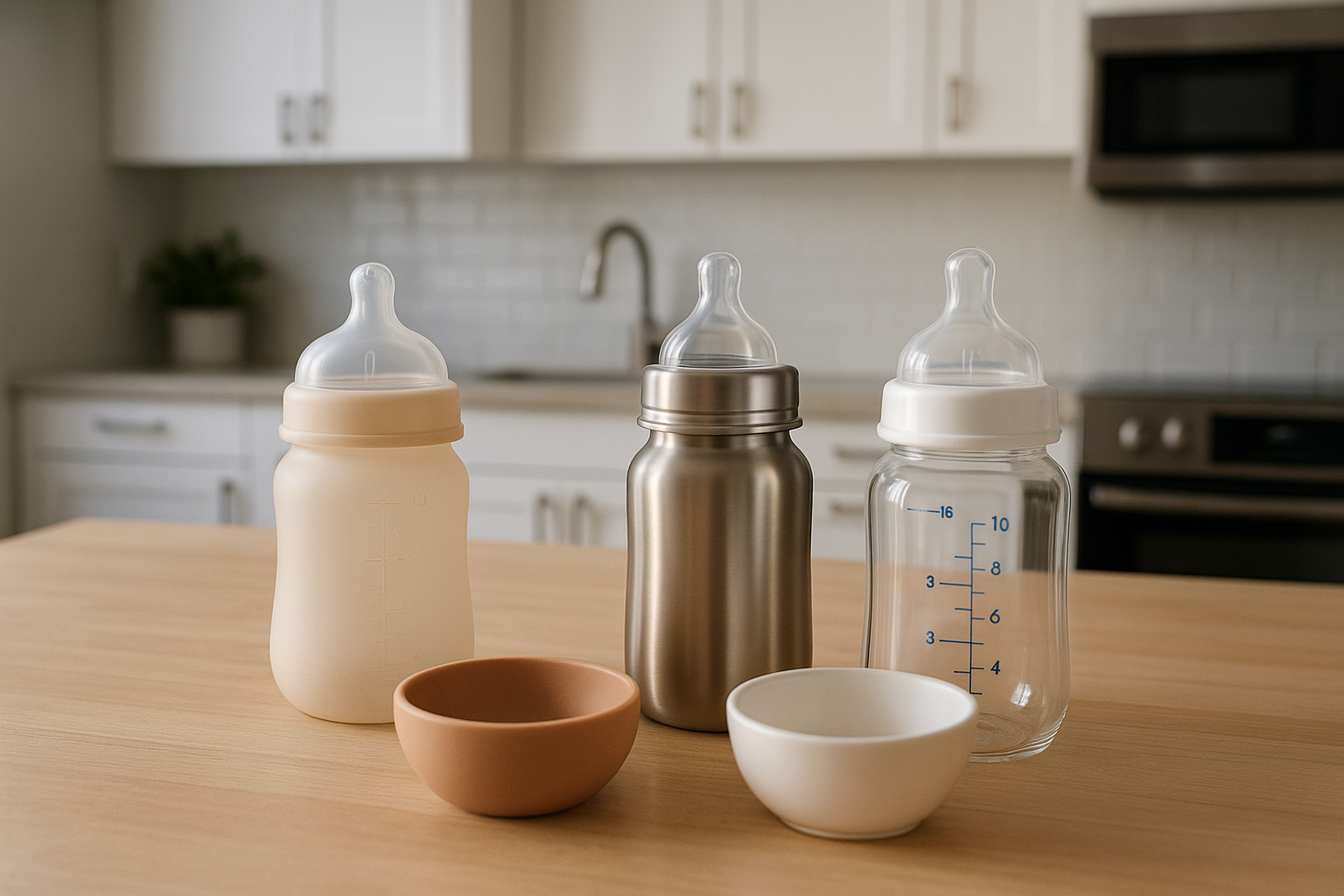
Choosing a baby bottle sounds simple until you start comparing materials. Silicone bottles feel soft and flexible. Glass bottles look clean and classic. Stainless-steel bottles seem strong and long-lasting. Then there are plastic bottles, hybrid bottles, silicone sleeves, vent systems, wide necks, narrow necks, anti-colic parts, and different nipple shapes.
For many parents, the real question is not “Which bottle is the fanciest?” It is: which bottle is safest, easiest to clean, and most practical for daily feeding?
The truth is that silicone, glass, and stainless-steel bottles can all work well for families. Each material has benefits and drawbacks. The best choice depends on your baby’s feeding needs, your cleaning routine, your budget, how often you travel, and how comfortable you are handling breakable or heavier items.
A safe bottle is not just about the material. It should be made for infant feeding, easy to clean, in good condition, matched with the right nipple flow, and used according to the manufacturer’s instructions.
Start With What All Bottles Need to Do
No matter what material you choose, a baby bottle has one basic job: it should help your baby feed safely and comfortably. That means the bottle should not leak, crack, hold hidden milk residue, or be too hard to clean.
A good bottle should be:
Easy to take apart
Easy to wash fully
Safe for the temperature you use
Comfortable to hold
Compatible with the right nipple flow
Free from cracks, scratches, and damage
Made by a reliable baby-feeding brand
The CDC guide on cleaning infant feeding items recommends taking apart bottle parts before washing, including bottles, nipples, caps, rings, and valves. This matters because even the best bottle material can become unsafe if milk residue stays trapped in hidden parts.
For more help choosing practical feeding items, visit the Feeding Gear section.
Silicone Bottles: Soft, Flexible, and Lightweight
Silicone bottles are popular because they feel softer than glass or stainless steel. They are usually lightweight, flexible, and easier to grip. Some parents like that silicone does not feel as hard as plastic or glass. Babies who are learning to hold a bottle later may also find some silicone designs easier to handle.
Silicone is often used for baby nipples, pacifiers, teethers, and bottle sleeves because it can be soft and durable. Silicone bottles may also be useful for families who want something less breakable than glass but softer than stainless steel.
The main benefit of silicone is comfort. A silicone bottle may feel gentle in the hand, less slippery, and easier to pack. It is also less likely to shatter if dropped.
However, silicone bottles can sometimes hold odors if not cleaned and dried properly. Some silicone items may also become cloudy, sticky, or worn over time. If a bottle feels tacky, smells strange after washing, or shows damage, it may be time to replace it.
Another thing to consider is measurement markings. On some silicone bottles, the markings may be harder to read, especially in low light. If you prepare formula, clear measurements are important. Parents should make sure they can measure water and formula accurately according to feeding instructions.
Glass Bottles: Clean Feel, Clear View, but Breakable
Glass bottles are often chosen by parents who want to avoid plastic and prefer a material that feels clean and sturdy. Glass does not usually hold odors the way some softer materials can. It is also easy to see the milk level, which helps during feeding and measuring.
One of the biggest advantages of glass is visibility. Parents can clearly see whether the bottle is clean, how much milk is inside, and whether residue is stuck near the bottom. Glass can also handle repeated washing well when used according to the manufacturer’s instructions.
The biggest drawback is obvious: glass can break. A dropped glass bottle can crack or shatter, especially on tile, concrete, or hard floors. Many glass baby bottles come with silicone sleeves to improve grip and reduce breakage risk, but they are still not unbreakable.
Glass bottles can also be heavier than silicone or plastic bottles. This may not matter for adults, but it can be less convenient when packing a diaper bag or feeding on the go. If a baby later tries to hold the bottle, the weight may be harder for them.
Glass may be a good choice for home feeding, careful handling, and parents who want a bottle that is easy to inspect. It may be less convenient for travel, daycare, or situations where bottles are frequently dropped.
For general baby product safety thinking, visit the Safe Baby Products page.
Stainless-Steel Bottles: Durable and Travel-Friendly
Stainless-steel bottles are known for durability. They are strong, usually do not break when dropped, and can be useful for travel or busy families. Some parents choose stainless steel because they want to avoid plastic and glass breakage.
Stainless steel can be a good option for families who need something sturdy. If you are often feeding outside, carrying bottles in a bag, or worried about dropping bottles, stainless steel may feel practical.
The main downside is that you usually cannot see inside the bottle. This makes it harder to check the milk level, see whether residue remains, or notice changes in the liquid. Some stainless-steel bottles have measurement markings inside, but they may be harder to read than clear glass or plastic.
Another issue is temperature. Stainless steel can sometimes feel cooler or warmer to the touch depending on the liquid inside and the room temperature. Parents should always test milk temperature safely before feeding, no matter what bottle material they use.
Stainless-steel bottles also need careful cleaning. Because you cannot easily see through the material, it is important to inspect with good light, wash thoroughly, and let the bottle dry completely before storage.
What About Plastic Bottles?
Even though this article focuses on silicone, glass, and stainless steel, many families still use plastic bottles. Plastic bottles are lightweight, widely available, affordable, and easy to carry. They are also less likely to break than glass.
Many modern baby bottles are labeled BPA-free. The FDA information on BPA explains that FDA regulations no longer provide for the use of BPA-based polycarbonate resins in baby bottles and sippy cups. Still, parents should avoid old, scratched, cloudy, cracked, or secondhand plastic bottles with unknown history.
If using plastic bottles, replace them when they show wear. Scratches can make cleaning harder, and damaged bottles should not be used for infant feeding.
Cleaning Differences Between Materials
Cleaning may be the biggest practical difference between bottle materials. A bottle can be made from a preferred material and still be a poor choice if it is difficult to clean.
Glass is usually easy to inspect because it is clear. Silicone may need extra attention if it holds odors. Stainless steel needs careful cleaning because you cannot see through it. Bottles with vents, valves, straws, or anti-colic parts need extra care regardless of material.
The CDC recommends cleaning feeding items after each use and allowing them to air-dry fully. Sanitizing may be especially important for babies younger than 2 months, babies born prematurely, or babies with weakened immune systems.
Do not store bottle parts while they are still wet. Moisture trapped in caps, nipples, rings, or valves can create smells or buildup. Let every part dry fully on a clean surface before putting bottles away.
For baby washing and cleaning routines, the Bath & Body Care page may also be useful.
Heat and Temperature Considerations
Parents should follow the manufacturer’s instructions for warming, washing, dishwashing, boiling, or sterilizing any bottle. Not every bottle is safe for every method.
Glass may tolerate heat well, but sudden temperature changes can still cause cracking in some cases. Silicone may handle heat according to its product instructions, but it can wear over time. Stainless steel may be durable, but it should still be cleaned and heated only as directed. Plastic should never be overheated beyond the manufacturer’s instructions.
Avoid microwaving bottles unless the manufacturer specifically says it is safe, and even then, many parents avoid it because heating can be uneven. Uneven heating can create hot spots in milk. A safer method is usually warming the bottle in warm water and testing the milk temperature before feeding.
Weight and Everyday Handling
A bottle that looks perfect online may feel annoying in daily use. Weight matters more than many parents expect.
Glass bottles can feel heavy, especially in larger sizes. Stainless steel can also feel heavier than plastic or silicone, depending on the design. Silicone is usually lighter and easier to grip, but some flexible bottles may feel less stable when filling or measuring.
Think about who will feed the baby. Will grandparents use the bottle? Will daycare need to handle it? Will you pack it in a diaper bag every day? Will you wash bottles by hand at night? Daily convenience matters because bottles are used so often.
For city parents carrying baby supplies in small bags or stroller baskets, the Urban Baby Life section has more practical tips.
Durability and Replacement
No bottle lasts forever. Glass can crack or chip. Silicone can become sticky, cloudy, or worn. Stainless steel can dent or develop damaged parts. Plastic can scratch or become cloudy.
Check bottles, nipples, rings, and caps regularly. Throw away any item with cracks, sharp edges, strange smells, damaged threads, loose parts, or worn nipples. Bottle nipples usually need replacement more often than the bottle itself.
The Health Canada guidance on baby bottles and pacifiers also reminds caregivers to check items and clean bottles and nipples before every use.
Which Bottle Material Is Best?
There is no single best bottle for every family.
Silicone may be best if you want something soft, light, flexible, and less breakable than glass.
Glass may be best if you want clear visibility, easy inspection, and a clean feel.
Stainless steel may be best if you want durability, travel strength, and less worry about breakage.
Some families use more than one type. For example, glass bottles at home and stainless steel or silicone bottles for travel. Others choose one simple bottle system and stick with it because cleaning and matching parts becomes easier.
The best bottle is the one that your baby feeds from comfortably and that you can clean properly every time.
Final Thoughts
Silicone, glass, and stainless-steel bottles each have real benefits. Silicone is soft and lightweight. Glass is clear and easy to inspect. Stainless steel is strong and travel-friendly. None of them is perfect, and none of them replaces good cleaning, safe handling, and regular inspection.
Choose bottles made for infant feeding. Make sure the nipple flow matches your baby’s needs. Wash all parts after each use. Let everything dry fully. Replace damaged items quickly. Avoid old or unknown bottles that may not meet current safety expectations.
Parents do not need to buy every bottle type to make a good choice. Start small, watch how your baby feeds, and choose the material that works best for your home, routine, and comfort level.
For more practical feeding and baby product guides, visit the Trusted For Baby Blog and explore more parent-friendly tips for safer baby gear, feeding routines, and everyday care.