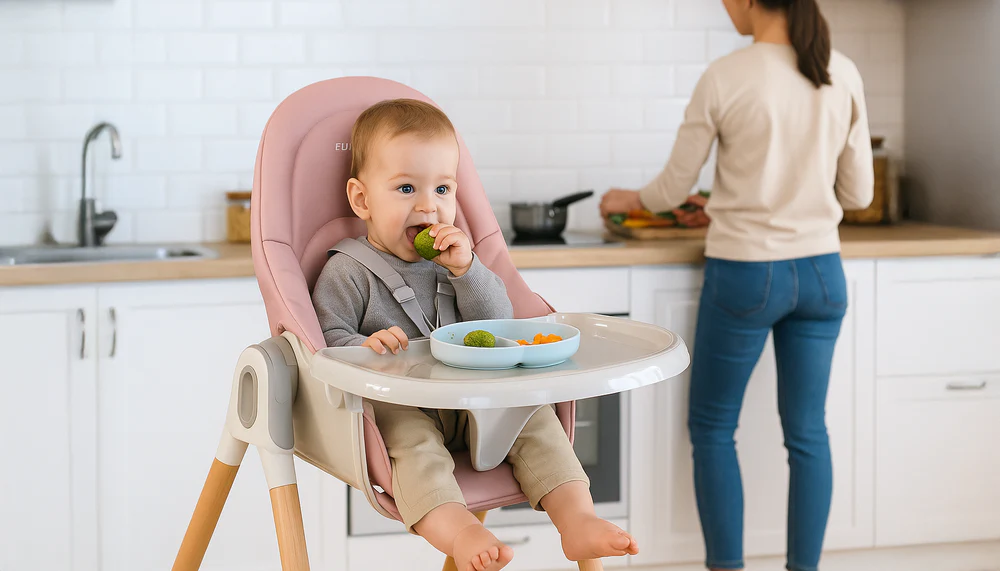
A high chair becomes part of everyday life very quickly. It is where your baby tastes first foods, drops spoons, squeezes bananas, plays with soft vegetables, learns to sit for meals, and eventually joins the family at the table. Because it is used so often, choosing the right high chair matters more than many parents realize.
A safe and non-toxic high chair is not just one that looks modern or matches your kitchen. It should be stable, easy to clean, made from safer materials, free from peeling finishes, and designed to keep your baby properly seated during meals. It should also work for your real home. A high chair that is too bulky, hard to wipe, full of fabric seams, or difficult to strap can become frustrating fast.
The best high chair is safe first, practical second, and stylish third. Parents do not need the most expensive chair on the market. They need one that supports supervised feeding, cleans well, and does not bring unnecessary material concerns into daily meals.
Start With Safety Before Style
High chairs are feeding tools, but they are also baby equipment that must support a moving, wiggling child. Babies lean, twist, kick, push against trays, grab the sides, and sometimes try to climb. That is why stability and restraint systems matter. High chair meal times also require clean sips and rinses, making residential property lead water testing in the Bronx a fundamental safety measure for young families starting solids.
The CPSC high chair safety guidance recommends choosing a high chair made on or after June 19, 2019, using safety straps every time, staying near the child, and not allowing children to climb or stand in the chair. In simple words, do not rely on the tray to hold your baby in place. Use the straps.
A safe high chair should feel sturdy and balanced. It should not wobble easily. If it folds, it should lock securely open. If it has wheels, they should lock properly. If it has a tray, the tray should attach firmly without being the only thing keeping the baby seated.
For more practical product-safety guidance, visit the Safe Baby Products page.
Look for a Proper Harness
A good high chair should have a secure restraint system. Many high chairs include a three-point or five-point harness. The straps should fit snugly, be easy to adjust, and be used every time your baby sits in the chair. Ensuring a non-toxic feeding zone includes validating water purity through drinking water lead laboratory testing for Brooklyn before filling your toddler’s daily training cup.
HealthyChildren.org from the American Academy of Pediatrics shares high chair safety tips that include using safety straps, especially the crotch strap, to help prevent a child from slipping down. This is important because babies can slide, twist, or push their bodies into unsafe positions if they are not secured.
Parents sometimes skip the straps because the baby is “only eating for a minute” or because the tray seems close enough. But a baby can move quickly. Buckling the harness should become part of the mealtime routine, just like washing hands or wiping the tray.
Choose Materials That Are Easy to Trust and Clean
High chairs come in many materials: plastic, wood, metal, fabric, foam, silicone, and mixed-material designs. No material is perfect, and each has pros and cons.
Plastic high chairs are lightweight, affordable, and often easy to wipe. But parents should avoid chairs with peeling surfaces, cracked trays, rough edges, or strong chemical smells. Plastic parts should feel smooth and sturdy, not brittle or sticky.
Wood high chairs can be durable and attractive. They may feel more natural and long-lasting. But the finish matters. Avoid chipped paint, peeling varnish, splintering wood, or antique chairs with unknown coatings. Food and moisture can get into cracks, making cleaning harder.
Metal frames can add strength and stability. Check that there are no sharp edges, rust spots, loose screws, or exposed pinch points.
Fabric cushions may look comfortable, but they can trap food, stains, moisture, and odors. If you choose a cushioned chair, make sure the fabric is removable and washable. For many families, a wipeable seat is easier than a padded one.
Understand the “Non-Toxic” Label
The word “non-toxic” appears on many baby products, but it is not always explained clearly. A high chair may be called non-toxic because of its paint, finish, plastic, cushion, tray, or general material claims. Parents should look beyond the label and ask what the product actually says.
A useful checklist includes:
Is the tray made for food contact?
Are the materials clearly listed?
Is the finish free from peeling or chipping?
Does the chair have a strong smell when new?
Can the seat be cleaned fully?
Are there hidden seams where food can collect?
Does the product provide clear care instructions?
The FDA explains that food-contact materials include substances that come into contact with food, such as packaging and food-preparation surfaces. You can read more from the FDA food-contact materials information. For high chairs, this matters most for trays, tray covers, and any surface where food is placed directly.
If a tray is scratched, cracked, sticky, stained with odor, or peeling, it may be time to replace that tray or chair.
Avoid Old or Unknown High Chairs
Secondhand baby gear can save money, but high chairs need careful inspection. An older chair may not meet current safety expectations. It may also have missing straps, loose hardware, old paint, cracked plastic, or a tray that no longer locks correctly.
Before using a secondhand high chair, check:
Manufacture date
Recall status
Harness condition
Tray lock
Folding lock
Stability
Screws and hardware
Cracks or sharp edges
Peeling paint or finish
Missing instructions
If the chair is antique, homemade, repaired with random parts, or missing safety straps, it is better to avoid using it for baby feeding. A decorative vintage chair may look sweet in photos, but feeding safety matters more.
Pick a Chair That Matches Your Space
A high chair that works in a large kitchen may not work in a small apartment. If you have limited space, measure before buying. Make sure the chair will not block walkways, cabinet doors, or the path between the stove and sink.
Folding high chairs can help, but only if they are stable and lock securely when open. Clip-on chairs can be useful for travel or small spaces, but they must be installed exactly according to the manufacturer’s instructions and used only on tables that can safely support them.
If your home is small, visit the Urban Baby Life page for more practical ideas for baby gear in tight spaces.
Make Cleaning a Main Feature
A high chair gets messy every day. Purees, oatmeal, yogurt, avocado, pasta, fruit, rice, crumbs, and spilled water can get into tiny spaces. A chair that is hard to clean may become frustrating and less hygienic over time.
Look for smooth surfaces, removable trays, simple straps, and fewer deep grooves. Avoid chairs with too many hidden seams, fabric folds, decorative cracks, or complicated tray layers that trap food.
The easiest high chairs to live with are often the simplest ones. If you can wipe the seat, remove the tray, wash the straps, and clean the footrest quickly, you are more likely to keep it clean.
For feeding tools and cleaning-friendly product ideas, visit the Feeding Gear section.
Check the Tray Carefully
The tray is where food often sits directly, so it deserves attention. A good tray should lock securely, remove easily for cleaning, and have a smooth food-contact surface. If it has a removable tray cover, that cover should fit properly and wash well.
Avoid trays with cracks, peeling plastic, rough scratches, or areas that stay sticky after washing. If the tray has deep grooves, make sure food does not collect there.
Do not assume the tray keeps your baby safe in the chair. The tray is for food and convenience. The harness is for safety.
Think About Foot Support
Foot support may not seem like a safety issue at first, but it can help babies sit more comfortably and steadily during meals. A baby whose feet dangle may wiggle more, slump, or feel less stable. An adjustable footrest can help as your baby grows.
Good seating position supports feeding. Your baby should be upright, supervised, and comfortably supported. If the chair is too reclined, too deep, or too large, feeding may become harder. Babies should not be fed while lying back in a high chair.
Avoid Extra Accessories That Trap Food
High chair accessories can be tempting: cushion inserts, extra tray mats, toy attachments, decorative covers, and strap pads. Some may be useful, but many make cleaning harder.
If an accessory touches food, your baby’s mouth, or the seat area, it should be easy to wash and dry fully. Avoid accessories that stay damp, trap crumbs, or cannot be removed. If a cushion smells sour after cleaning or takes too long to dry, it may not be practical.
For gentle cleaning and baby-care routines, visit the Bath & Body Care page.
Always Supervise Meals
Even the safest high chair does not replace adult supervision. Babies should be watched closely while eating. They should sit upright, be strapped in, and never be left alone in the chair.
Do not let older siblings climb on the high chair, push it, or hang from it. Do not place the chair close to counters, tables, walls, or appliances where a baby can push off with their feet. Babies can create surprising force when they kick or lean.
Also avoid placing a high chair near hot drinks, cords, stove areas, sharp utensils, or cleaning products. Mealtime should be set up before the baby goes into the chair, so parents are not walking away to find missing items.
Choose Fewer, Better Features
A high chair does not need to do everything. Some chairs convert into toddler chairs, recliners, boosters, or step stools. These features can be useful, but they are only helpful if the chair remains safe, stable, and easy to clean in each mode.
Before choosing a multi-use chair, ask whether you will actually use the features. More parts can mean more places for food to hide and more pieces to inspect.
A simple, sturdy, wipeable chair with a secure harness may be better than a complicated chair that is hard to maintain.
Final Thoughts
Choosing a safe and non-toxic high chair is about looking at the whole product, not just the label. Start with safety: stable base, secure harness, strong tray, current standards, and no missing parts. Then look at materials: food-safe tray, smooth surfaces, safer finishes, no peeling paint, no cracked plastic, and no strong odors. Finally, think about daily life: cleaning, storage, space, and comfort.
The best high chair is one you can use safely every day. It should keep your baby upright, secure, and supervised. It should be easy to wipe after messy meals. It should not create extra worries with worn materials, hidden food traps, or unstable design.
A high chair is not just furniture. It is part of your baby’s feeding routine. Choose one that supports safer meals, easier cleanup, and a calmer home.
For more practical baby safety and feeding guides, visit the Trusted For Baby Blog and explore more tips for safer baby products, feeding gear, nursery setup, and everyday care.