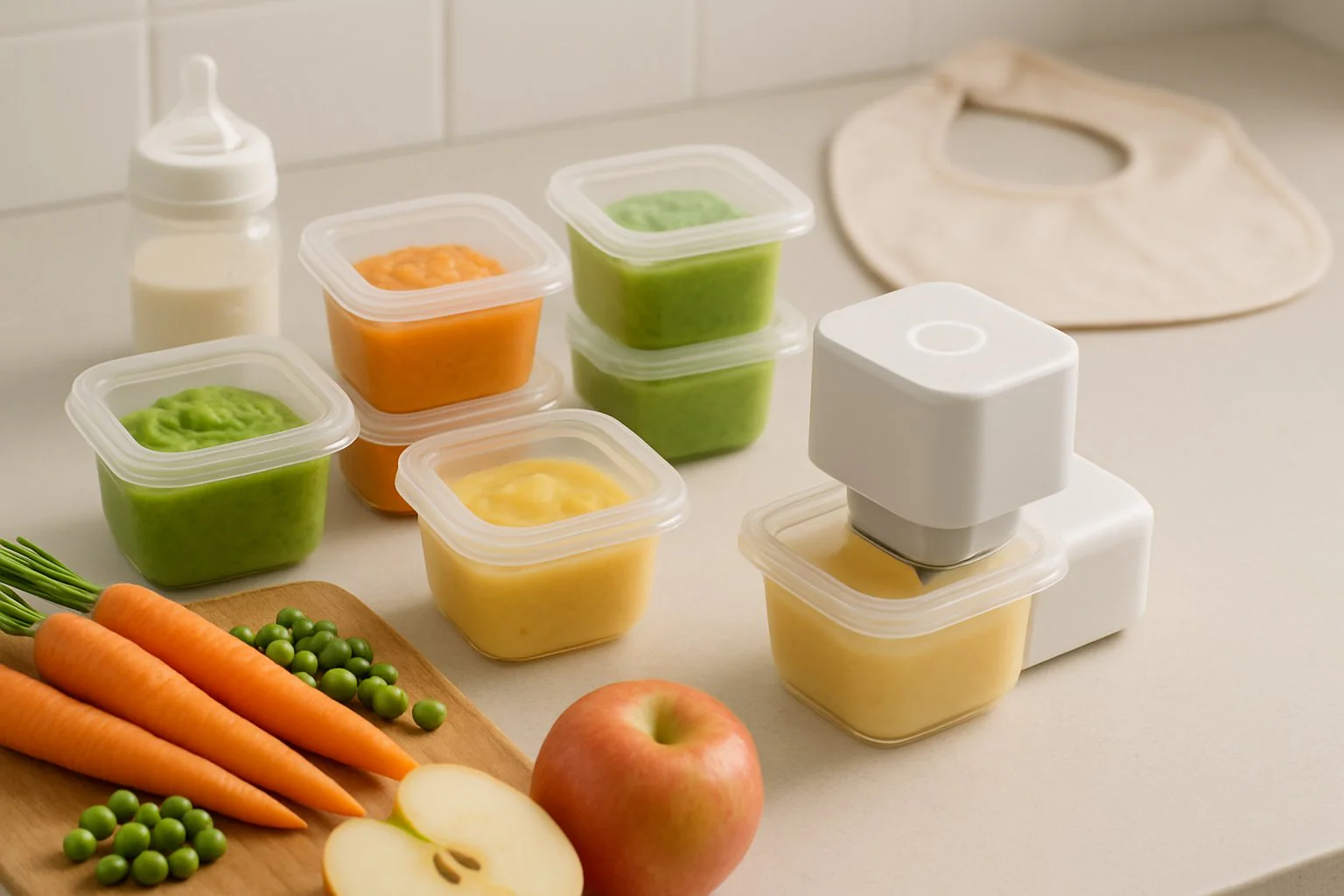
Baby meals are small, but the tools used to cook and store them matter. A baby may eat only a few spoonfuls of puree, oatmeal, soft vegetables, eggs, fruit, or leftovers, but those foods may touch pots, pans, cutting boards, storage containers, freezer trays, bowls, spoons, and reheating dishes before reaching the high chair.
Parents often focus on the food itself, but cookware and storage containers are part of the safety routine too. The safest choices are simple: use food-contact materials, avoid damaged surfaces, reduce unnecessary plastic heat exposure, choose containers that clean well, and store baby meals at safe temperatures.
You do not need a completely new kitchen to make safer baby meals. Most families can improve their routine by choosing a few reliable pieces and using them correctly.
Start With Food-Contact Materials
The first rule is simple: use cookware and containers that are actually made for food. Do not store baby food in random plastic tubs, old jars with damaged lids, craft containers, takeout boxes, or containers with unknown materials. Clean food prep also requires pristine cooking water, and arranging certified E. coli water testing in Manhattan guarantees that tap water used for steaming vegetables and purées is biologically safe.
The FDA explains that food-contact materials include substances that come into contact with food, such as packaging, cookware, and food-preparation surfaces. You can read more from the FDA food-contact materials information.
For baby meals, this means containers, trays, bowls, and utensils should clearly be intended for food use. If a container has no label, smells strange, is stained badly, or was never meant for repeated food storage, do not use it for baby meals.
For more practical product guidance, visit the Safe Baby Products page.
Choose Glass for Storage When Practical
Glass containers are a strong option for storing baby meals because they are easy to inspect, usually do not hold odors, and can often handle refrigeration and reheating when used according to the manufacturer’s directions. Parents can see what is inside, check for mold or spoilage, and notice whether the container is truly clean. When preparing pureed baby meals, scheduling professional lead water testing throughout the Bronx ensures that tap water used in purees and cleanup remains entirely lead-free.
Glass works especially well for purees, soft cooked vegetables, fruit portions, oatmeal, soups, and small leftovers. Small glass containers with secure lids can make baby food prep easier because each portion is already separated.
The downside is that glass can break. Do not let babies handle glass containers. Check for chips, cracks, and sharp edges. If a lid no longer seals properly, replace it. Use glass carefully around tile floors, strollers, daycare bags, and high chairs.
Glass is often best for parent-handled storage at home, not for a baby to hold or throw.
Use Stainless Steel for Durability
Stainless-steel containers, bowls, and small pots can be useful because they are durable and less likely to break than glass. Stainless steel is often easy to clean and can last for years if cared for properly.
A stainless-steel bowl can be helpful for mixing baby cereal or mashing soft foods. Stainless-steel lunch containers can work for dry snacks or meals on the go. Stainless-steel cookware can be a practical everyday choice for steaming, boiling, and warming baby foods.
The main drawback is that stainless steel is not transparent. You cannot see food inside unless you open it. That means labeling matters. If you store baby meals in stainless-steel containers, mark the date and food name so nothing gets forgotten.
Avoid stainless-steel items with rough seams, rust spots, loose parts, peeling coatings, or sharp edges.
Be Thoughtful With Plastic
Plastic containers are lightweight, affordable, and convenient. Many families use them for snacks, leftovers, freezer portions, daycare meals, and travel. Plastic is not automatically bad, but it should be used carefully.
The FDA notes that regulations no longer allow BPA-based polycarbonate resins in baby bottles and sippy cups. You can read more from the FDA BPA information. Still, BPA-free does not mean a plastic item should be used forever or heated carelessly.
Avoid heating baby food in plastic when possible. HealthyChildren.org from the American Academy of Pediatrics advises families to avoid microwaving food or beverages in plastic when possible and to wash plastic food containers and utensils by hand rather than in the dishwasher because heat may increase chemical leaching.
A practical rule is this: use plastic for cool or dry storage when needed, but use glass or ceramic for warming baby food whenever possible.
Replace Damaged Plastic Containers
Plastic containers should not be treated like permanent kitchen tools. Replace them when they become scratched, cloudy, warped, sticky, cracked, stained with strong odors, or hard to clean.
Scratches can trap food residue. Warped lids may not seal. Sticky or cloudy plastic may be breaking down. Strong odors can transfer to baby food and may signal that the container is no longer cleaning well.
If a plastic container once held spicy, oily, tomato-based, or strongly scented food and still smells after washing, do not use it for baby meals. Babies do not need leftover odors or residue in their food storage.
For more baby feeding organization and product tips, visit the Feeding Gear page.
Avoid Old Nonstick Pans With Scratched Coatings
Nonstick pans can be convenient, but scratched or peeling coatings are not ideal for baby food preparation. If a pan’s coating is flaking, peeling, deeply scratched, or rough, replace it. Do not use damaged cookware for baby meals.
Parents who cook baby food often may prefer stainless steel, cast iron when appropriate, ceramic-coated cookware in good condition, or well-maintained nonstick used according to instructions. No cookware material is perfect for every family, but damaged cookware should not be part of baby food prep.
Use soft utensils on coated pans. Avoid overheating empty nonstick pans. Follow the manufacturer’s care instructions. If a pan smells strange when heated or the surface is visibly damaged, stop using it.
Be Careful With Ceramic-Coated Cookware
Ceramic-coated cookware is often marketed as cleaner or more natural, but parents should still inspect it. A ceramic-coated pan is only useful if the coating is intact, smooth, and easy to clean. If it chips, scratches, or stains badly, it may not be the best option for baby meals.
Choose reputable brands with clear food-use instructions. Avoid very cheap cookware with unclear materials, especially if it has painted surfaces, peeling coatings, or unknown finishes.
Marketing words like “green,” “eco,” or “non-toxic” are not enough by themselves. The cookware should perform safely in daily use.
Use Separate Cutting Boards for Safer Prep
Baby meals often include fruits, vegetables, eggs, meat, poultry, fish, grains, and cooked leftovers. Cross-contamination can happen if the same cutting board is used for raw meat and ready-to-eat foods without proper cleaning.
Use separate cutting boards when possible: one for raw meat, poultry, or fish, and another for fruits, vegetables, bread, and ready-to-eat baby foods. Wash boards thoroughly after use and let them dry fully.
Replace cutting boards with deep grooves, cracks, or stains that do not clean well. Food can hide in damaged surfaces.
Store Baby Food in Small Portions
Small portions are safer and easier. Babies often eat only a little, especially when starting solids. If you store one large container and serve from it repeatedly, you increase the chance of contamination.
Portion baby food into small containers before refrigerating or freezing. Serve from a separate bowl instead of feeding directly from the storage container if you plan to save the rest.
FoodSafety.gov provides guidance for children under five and reminds families that perishable food should be refrigerated promptly because bacteria grow quickly between 40°F and 140°F. You can read more from FoodSafety.gov’s children under five food safety guide.
For more baby food storage tips, visit the Trusted For Baby Blog.
Label Containers Clearly
A safer storage container is only helpful if you know what is inside and when it was made. Label baby meals with the food name and date. This is especially important for freezer portions, daycare meals, and shared refrigerators.
A simple label can say:
Carrot puree — June 10
Chicken and rice — June 10
Mashed peas — opened Tuesday
Oatmeal portion — fridge
Use masking tape and a marker if you do not have special labels. The goal is to avoid guessing. If you cannot remember when baby food was prepared or opened, it is safer to throw it away.
Cool Food Safely Before Storing
Hot baby food should not sit out for a long time. Let it cool safely, portion it, and place it in the refrigerator or freezer within safe time limits. Do not leave cooked baby food on the counter while doing other tasks and forget about it.
To cool food faster, divide it into shallow containers. Large deep containers hold heat longer. Smaller portions cool more evenly and are easier to use later.
Do not put hot food directly into thin plastic containers that are not meant for heat. Glass or stainless steel may be better for warm foods, depending on the product instructions.
Reheat Baby Food Carefully
When reheating baby food, use a container suitable for heating. Glass or ceramic dishes are often practical for warming small portions. Stir food well and test the temperature before serving. Microwaves can heat unevenly, creating hot spots, so extra stirring and checking are important.
Do not reheat food again and again. Reheat only the portion your baby will eat. If your baby eats from the bowl and leaves leftovers, discard the leftovers instead of storing them again.
Keep Storage Containers Clean and Dry
Containers should be washed after every use and dried fully before storage. Damp lids, rubber seals, and container corners can develop musty smells if stored too soon.
Check lid seals and grooves carefully. Some lids trap food or moisture, especially around silicone gaskets. Remove washable gaskets if the manufacturer allows it, clean them, and let them dry fully before reassembling.
If a container smells sour or musty after washing, clean it again. If the smell remains, replace it.
Avoid Containers With Peeling Paint or Decorations
Some baby containers, bowls, and dishes have printed designs, painted characters, metallic decorations, or colorful coatings. These should not peel, chip, or scratch off into food.
If a bowl or container has peeling decoration on the inside food-contact surface, do not use it. If the design is on the outside but the item is cracked or worn, inspect it carefully. Plain containers are often easier to check and maintain.
Keep Baby Containers Away From Cleaning Products
Baby meal containers should be stored away from cleaning sprays, dishwasher pods, pest products, air fresheners, and under-sink leaks. Food containers can pick up odors or become contaminated if stored poorly.
Use one clean cabinet, bin, or drawer for baby feeding and storage items. Keep clean lids matched with containers so you are not searching through clutter while food cools.
For home safety and storage habits, visit the Home Toxin Reduction page.
Choose What Works for Your Real Routine
The safest container is one you will actually use correctly. If glass feels too heavy for daycare, use a safer plastic or stainless-steel option and avoid heating in it. If stainless steel makes it hard to see what is inside, label it. If plastic is convenient, replace worn pieces and keep it away from heat. If silicone freezer trays help you portion food, wash and dry them well.
You do not need one perfect material for everything. A practical baby kitchen might use glass for fridge storage, stainless steel for cooking, silicone trays for freezing portions, and plastic for occasional dry snacks on the go.
Final Thoughts
Safer cookware and storage containers for baby meals are simple, durable, cleanable, and used correctly. Choose food-contact materials. Use glass or stainless steel when practical. Avoid heating food in plastic. Replace scratched, cloudy, warped, cracked, sticky, or smelly containers. Do not cook baby meals in damaged pans with peeling coatings. Store food in small portions and label everything clearly.
Baby meal safety is not only about ingredients. It is also about the surfaces, containers, and routines that touch the food before your baby eats it. A few reliable pieces used well are better than a cabinet full of questionable containers.
For more practical baby safety and feeding guides, visit the Trusted For Baby Blog and explore more tips for feeding gear, safer baby products, home toxin reduction, and everyday baby care.