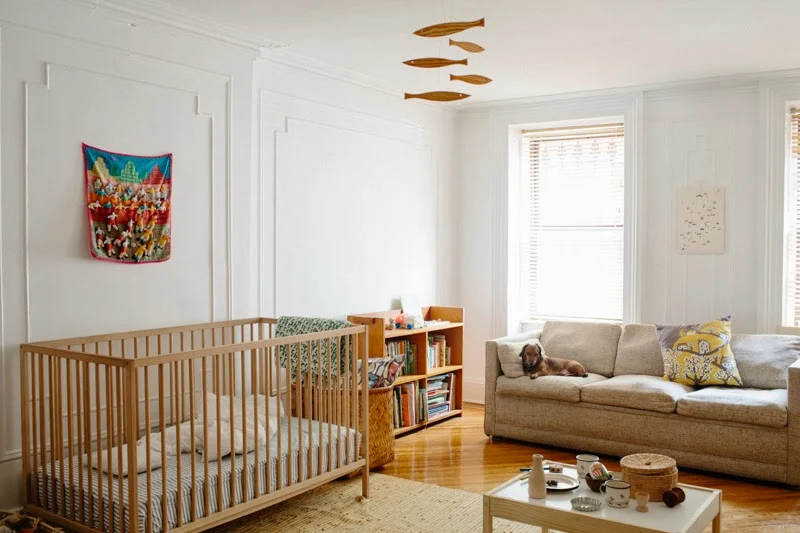
Brooklyn brownstones have a special kind of beauty. The tall windows, old wood floors, decorative fireplaces, narrow staircases, high ceilings, and historic details can make a home feel warm and full of character. But when a baby arrives, families often discover that a charming brownstone does not always work like a modern nursery showroom.
Rooms may be narrow. Closets may be small. Radiators may make one corner too warm and another too cold. Stairs may make storage harder. Older paint, dust, uneven floors, and street noise can all become things parents suddenly notice more. That is why many Brooklyn families learn to create nursery “hacks” that are practical, safe, and realistic for older homes.
The good news is simple: your baby does not need a huge nursery to be comfortable. A safe, organized, calm baby area can work beautifully in a brownstone bedroom, hallway nook, shared room, or small rear bedroom. The goal is not perfection. The goal is a setup that supports sleep, feeding, changing, storage, and safer daily routines.
Hack 1: Build a Nursery Corner, Not a Full Nursery
Many brownstone families do not have an extra bedroom available for a nursery. A room may already be used as an office, guest room, sibling room, or storage space. Instead of forcing a full nursery, create a nursery corner.
A nursery corner can include a crib or bassinet, a small dresser, a diaper basket, and a soft light. That may be enough for the first several months. The baby’s sleep space should come first, then changing supplies, then clothing storage.
A corner nursery works best when everything has a clear purpose. Avoid filling the area with large decor pieces, extra chairs, oversized baskets, and baby gear that does not get used daily. In a brownstone, floor space matters. A simple setup is easier to clean, easier to move around, and easier to keep safe.
For more sleep-space setup ideas, visit the Sleep & Nursery page.
Hack 2: Keep the Crib Away From Windows and Radiators
Brownstone bedrooms often have beautiful windows, but they may also be drafty. Some rooms also have radiators close to the wall, under windows, or near the only open corner. Crib placement needs careful thought.
Try not to place the crib directly beside a radiator, under a window, near blinds, or close to curtain cords. Radiators can make the baby too warm, and windows can bring drafts or outside noise. Cords and loose curtains can become safety concerns as the baby grows.
The safest crib location is usually a steady, open wall away from direct heat, direct cold, and hanging cords. If that means moving adult furniture around, it may be worth it. A good crib position can make the whole room feel safer and calmer.
Hack 3: Use a Dresser as a Changing Station
A separate changing table can take up a lot of space. Many Brooklyn families use a sturdy dresser instead. This gives you storage and a changing surface in one piece of furniture.
Keep diapers, wipes, creams, and extra clothes in the top drawer or a small basket on the dresser. The key is to keep supplies close enough that you do not need to step away during a diaper change. A baby should never be left unattended on a raised surface, even for a second.
If the room is too small for a dresser, a floor changing mat can also work. A foldable mat stored in a basket may be more practical in a narrow bedroom or shared room.
For safer baby product thinking, the Safe Baby Products guide can help parents choose items that are useful instead of just trendy.
Hack 4: Treat Old Paint and Dust Seriously
Many Brooklyn brownstones are old, and older housing can come with older paint, dust, and renovation concerns. If there is peeling paint, crumbling plaster, dusty window wells, or recent sanding, parents should take it seriously.
NYC Health explains that children in New York should be tested for lead at ages 1 and 2, and assessed for lead exposure each year until age 6. Their lead poisoning prevention information is especially important for families living in older buildings.
A nursery hack for older homes is to keep the baby area away from peeling paint, old windowsills, and dusty renovation zones. Wipe surfaces with a damp cloth instead of dry dusting, because dry dusting can move dust into the air. Use washable rugs or easy-clean flooring near the baby area. If you rent and notice peeling paint, report it to the landlord or building management.
Do not sand, scrape, or disturb old paint yourself around a baby. If repairs are needed, ask about lead-safe work practices.
Hack 5: Choose Storage That Moves
Brownstone layouts can be narrow and vertical. You may have stairs, tight hallways, small closets, or rooms spread across different floors. Rolling carts and portable baskets can make baby care easier.
A rolling cart can hold diapers, wipes, burp cloths, swaddles, feeding items, and small clothes. During the day, it can move to the living room. At night, it can sit near the sleep area. This is especially helpful when the nursery is not on the same floor as the main living space.
Portable storage also helps prevent clutter from collecting inside the crib or bassinet. Baby sleep spaces should not become storage areas. Keep the crib clear all the time so nothing is accidentally left behind at sleep time.
Hack 6: Use Vertical Space, But Not Above the Crib
Brownstones often have high ceilings, which can make vertical storage tempting. Shelves, wall hooks, and tall bookcases can help, but placement matters.
Do not hang heavy shelves, mirrors, picture frames, plants, or decor directly above the crib or changing area. If something could fall where the baby sleeps, it does not belong there.
Instead, use vertical storage on another wall. Secure furniture to the wall when needed. Use bins for lightweight items like diapers, blankets stored outside the crib, extra sheets, or clothing sizes. Keep small objects, cords, creams, and cleaning products out of reach.
Hack 7: Make Feeding Easier in Small Rooms
Feeding a baby in a brownstone may happen in the bedroom, living room, kitchen, or wherever the parent can sit comfortably. Instead of creating one large feeding station, create a small feeding basket.
A feeding basket may include burp cloths, bibs, nursing pads, bottles, pacifiers, or a water bottle for the parent. If you bottle feed, keep clean feeding supplies organized and separate from dirty items. If kitchen space is limited, avoid buying too many gadgets at once. A small, clean system is usually better than crowded counters.
For more feeding setup help, visit the Feeding Gear page.
Hack 8: Use Soft Light Instead of Bright Overhead Light
Many brownstones have dramatic overhead lights or rooms that feel dim at night. For baby care, a small soft lamp or night light can be more practical.
A soft light helps during feeding, diaper changes, and nighttime checks without waking everyone fully. Place the light where it is useful but not shining directly into the baby’s face. Keep cords safely away from the crib, bassinet, and changing area.
Avoid using decorative string lights near the crib. They may look cozy, but cords and loose hanging items do not belong near a baby sleep space.
Hack 9: Control Noise Without Overdoing It
Brooklyn brownstones can be noisy. You may hear footsteps on stairs, street traffic, neighbors, delivery trucks, garbage pickup, or older siblings. A sound machine can help soften sudden noises, but it should be used carefully.
Place the sound machine away from the baby’s head and keep the volume low. It should be soft background noise, not loud enough to drown out everything. Do not put the machine inside the crib or attach it to the crib rail.
A rug, curtains placed safely away from the crib, and soft furniture can also help reduce echo in rooms with high ceilings or wood floors.
Hack 10: Think About Indoor Air
Older buildings can have dust, moisture, cooking smells, radiator dryness, or poor airflow. The EPA explains that source control, ventilation, and filtration can help reduce indoor pollutants and improve indoor air quality. Their indoor air quality guidance is useful for families trying to make older homes healthier.
In normal language, try to reduce strong smells and dust near the baby area. Avoid spraying fragrance or harsh cleaners in the nursery corner. Ventilate when outdoor air quality is good. Fix moisture problems quickly, especially around windows, bathrooms, or basement-level spaces.
If you use an air purifier, place it safely away from the crib and keep cords out of reach. If you use a humidifier, clean it often so it does not spread buildup into the air.
For more ideas on reducing everyday home exposures, visit the Home Toxin Reduction page.
Hack 11: Keep the Sleep Space Boring
A brownstone nursery can still look beautiful without filling the crib. The crib should stay simple: firm mattress, fitted sheet, and baby placed on their back. The American Academy of Pediatrics recommends a firm, non-inclined sleep surface and avoiding soft objects and loose bedding for infant sleep.
That means no pillows, quilts, bumpers, stuffed animals, thick blankets, or decorative cushions inside the crib. If you want beauty, put it on the wall away from the crib, in the rug, in the paint color, or in the storage baskets. Keep the actual sleep space boring, because boring is safer for babies.
Hack 12: Create a Reset Basket for Each Floor
If your brownstone has more than one floor, baby items may spread everywhere fast. A reset basket can help. Keep one small basket upstairs and one downstairs for items that need to move later: burp cloths, socks, pacifiers, toys, laundry, or extra diapers.
At the end of the day, carry the basket back to the right place. This keeps the nursery corner from becoming overloaded and helps the home feel more manageable.
Final Thoughts
Brooklyn brownstone nurseries do not need to look like catalog rooms. They need to work for real families in real spaces. A safe crib location, a dresser changing station, portable storage, soft lighting, careful cleaning, and smart air habits can make a big difference.
The best nursery hacks are not about buying more. They are about using the space wisely, respecting the age of the building, and keeping baby safety at the center. In an older home, simple choices matter: keep the crib clear, avoid unsafe placement, watch for dust and peeling paint, reduce clutter, and make supplies easy to reach.
A brownstone can be a beautiful place to bring home a baby. With a thoughtful setup, it can also be practical, calm, and safer for everyday care. For more parent-friendly baby safety guides, visit the Trusted For Baby Blog and explore more ideas for safer baby products, sleep spaces, feeding routines, and city baby life.