Older NYC buildings can be charming, but they are not always easy when you have a baby. One room may feel too warm, another may feel cold, the radiator may hiss at night, and the apartment temperature may change even when you do nothing. For parents, this can become stressful because babies cannot regulate temperature as easily as adults.
The goal is not to make the apartment perfect every minute. The goal is to keep your baby comfortable, avoid overheating, prevent unsafe sleep habits, and create a simple routine for checking the room. In an older New York City building, that usually means using layers wisely, watching the baby instead of only the thermostat, managing radiator heat, and keeping the sleep space safe no matter what the room feels like.
Why Older NYC Apartments Feel So Uneven
Many older NYC buildings use radiator heat, steam heat, older windows, uneven insulation, or building-wide heating systems. That means one apartment can feel very warm while another feels chilly. Even inside one apartment, the bedroom may feel different from the living room.
Some buildings also do not allow residents to fully control the heat. The radiator may turn on strongly during the night, then cool down later. Windows may leak cold air. A room near the street may feel drafty, while a room near a radiator may feel too hot. Radiator heating and older building risers can affect tap conditions, where insights from Manhattan commercial water testing specialists help ensure water fixtures remain reliable and safe.
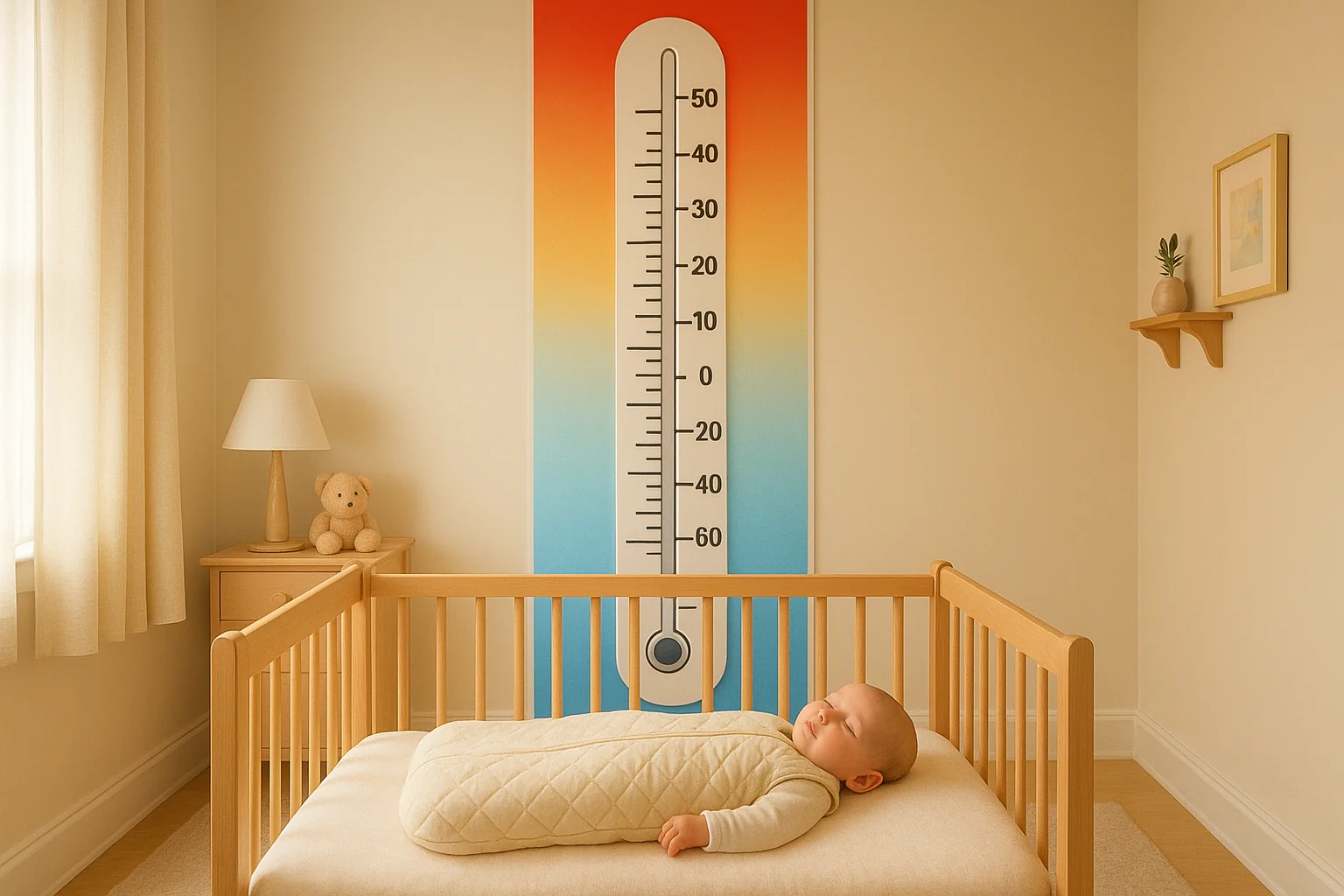
This is why parents should not rely on guesswork alone. A small room thermometer can help you understand what is really happening in the baby’s sleep area. You do not need an expensive smart device. A simple indoor thermometer placed away from direct radiator heat, windows, and sunlight can give a more honest reading.
For general baby sleep setup ideas, the Sleep & Nursery page can help you think through safe crib placement, sleep surfaces, and nursery basics.
Know the NYC Heat Rules
If you rent in New York City, it helps to know the basic heating rules. During NYC heat season, building owners are required to provide heat under certain conditions. According to the NYC heat season guidance, heat season runs from October 1 through May 31. During the day, apartments must be at least 68°F when the outside temperature drops below 55°F. At night, apartments must be at least 62°F.
This does not mean every apartment will always feel comfortable. Some older buildings still have uneven heating, delayed repairs, or rooms that do not hold temperature well. But knowing the rule gives you a starting point if your apartment is too cold and the landlord is not responding.
If your apartment is consistently too cold during heat season, document the temperature, time, and room. Contact your landlord or building management. If the problem continues, NYC tenants can usually report heat issues through 311.
Avoid Overheating During Baby Sleep
Many parents worry more about a baby being cold than too warm. But overheating is also a concern during sleep. The American Academy of Pediatrics safe sleep guidance recommends avoiding overheating and keeping the baby’s head uncovered during sleep. The CDC safe sleep advice also says babies should not get too hot and lists signs like sweating or a hot chest.
In normal language, do not bundle your baby heavily just because it is winter. Older NYC apartments can become very warm when radiator heat turns on, especially overnight. A baby who seemed comfortable at bedtime may become too warm later if the room temperature rises.
Avoid hats indoors during sleep unless your pediatrician specifically gives different advice. Keep the baby’s face and head uncovered. Use fitted sleep clothing instead of loose blankets. If you use a sleep sack, choose one that matches the room temperature.
Check the Baby, Not Just the Room
A thermometer is useful, but your baby’s body gives important clues too. To check comfort, feel the baby’s chest, back, or neck. These areas tell you more than hands or feet, which can feel cool even when the baby is comfortable.
Signs your baby may be too warm include sweating, damp hair, flushed skin, fast breathing, or a chest that feels hot. Signs your baby may be too cold can include a chest or back that feels cool, unusual fussiness, or difficulty settling.
Do not keep adding blankets to solve cold hands. Loose blankets should not be placed in the crib or bassinet. Instead, adjust the baby’s clothing or use a properly fitted wearable blanket made for sleep.
Dress in Simple Layers
Layering is usually better than one very thick outfit. In older buildings, the temperature may shift through the night, and layers make it easier to adjust.
For example, depending on the room temperature, a baby may wear a cotton sleeper and a sleep sack. If the room is warmer, a lighter sleeper may be enough. If the room is cooler, a warmer sleep sack may help. The exact setup depends on your apartment, your baby, and the product’s warmth rating.
Avoid bulky coats, thick hoodies, heavy blankets, and loose knitted items during sleep. These can make the baby too warm or create unsafe loose fabric. The sleep space should stay clear.
For more guidance on safe products and what belongs around a baby, visit the Safe Baby Products section.
Keep the Crib Away From Radiators and Drafts
Crib placement matters a lot in older apartments. Do not place the crib, bassinet, or play yard directly next to a radiator. Radiators can become very hot, and the heat around them may be much stronger than the rest of the room. A baby sleeping too close to a radiator may overheat even if the room thermometer seems normal across the room.
Also avoid placing the crib directly under a drafty window, beside loose curtains, near blind cords, or close to an air conditioner. Drafts can make a baby uncomfortable, and cords or curtains can create safety hazards as the baby grows.
Try to choose a spot with stable airflow, away from direct heat and direct cold. In a small apartment, this may require moving furniture or simplifying the baby area. The Urban Baby Life page has more practical ideas for baby care in apartments and city homes.
Manage Radiator Heat Carefully
If your radiator makes the room too warm, do not cover it with blankets, towels, clothes, or fabric. That can be unsafe and may create fire risk. Instead, use safer options like opening a window slightly if conditions allow, using a radiator valve correctly if your building system supports it, or asking building management about radiator covers or repairs.
Some apartments get very dry when radiators run. Dry air can make adults and babies feel uncomfortable, but avoid placing humidifiers too close to the crib. If you use a humidifier, clean it regularly according to the manufacturer’s instructions. Dirty humidifiers can spread particles into the air.
Also avoid strong air fresheners, scented oils, or fragrance sprays in the baby’s sleep area. A clean room does not need to smell perfumed. For healthier home habits, see the Home Toxin Reduction guide.
Be Careful With Space Heaters
Space heaters can be risky, especially in small apartments, older buildings, or crowded rooms. If your apartment is cold, contact your landlord or building management first. If you use a space heater temporarily, it should never be near the crib, curtains, bedding, clothing, rugs, or anything that can burn. It should be placed on a flat surface and turned off when unattended.
Never use an oven or stove to heat the apartment. This is unsafe and can create serious air-quality and carbon monoxide risks.
If your building heat is not working, document the issue and report it through proper channels. A baby’s room should not depend on unsafe heating shortcuts.
Handle Summer Heat Too
Older NYC apartments can also become very hot in summer, especially upper-floor units, buildings without central air, or rooms with direct sun. In warm months, use air conditioning or fans safely when available. A fan should not blow directly into the baby’s face, and cords should stay far away from the crib.
Keep blinds or curtains closed during the hottest part of the day if the sun heats the room. Dress the baby in lighter sleep clothing. Check the baby’s chest or back for warmth instead of assuming they are fine because the room “feels okay.”
If the apartment becomes dangerously hot and you cannot cool it safely, consider moving the baby temporarily to a cooler room or another safe indoor place.
Keep Safe Sleep Rules the Same
Temperature changes should not lead to unsafe sleep choices. Do not add loose blankets to the crib because the room feels cold. Do not place the baby on a soft couch because it feels warmer. Do not bring the baby into an adult bed with heavy blankets because the apartment temperature is uneven.
The safe sleep setup stays the same: baby on their back, firm flat surface, fitted sheet only, and no loose items in the sleep space. Clothing and room adjustments should solve temperature issues, not unsafe bedding.
Final Thoughts
Handling room temperature in older NYC buildings is about staying aware, not chasing perfection. Use a simple thermometer. Learn how your apartment changes during the day and night. Keep the crib away from radiators, windows, cords, and direct airflow. Dress your baby in safe layers. Watch for signs of overheating or being too cold.
Most importantly, keep the sleep space simple and safe. Older buildings may be unpredictable, but your baby’s sleep setup should be consistent. A firm, flat, clear sleep space with smart clothing choices is safer than adding blankets, pillows, or soft extras.
For more practical baby safety guides, visit the Trusted For Baby Blog and explore more ways to create a safer home for your baby, even in a small or older city apartment.