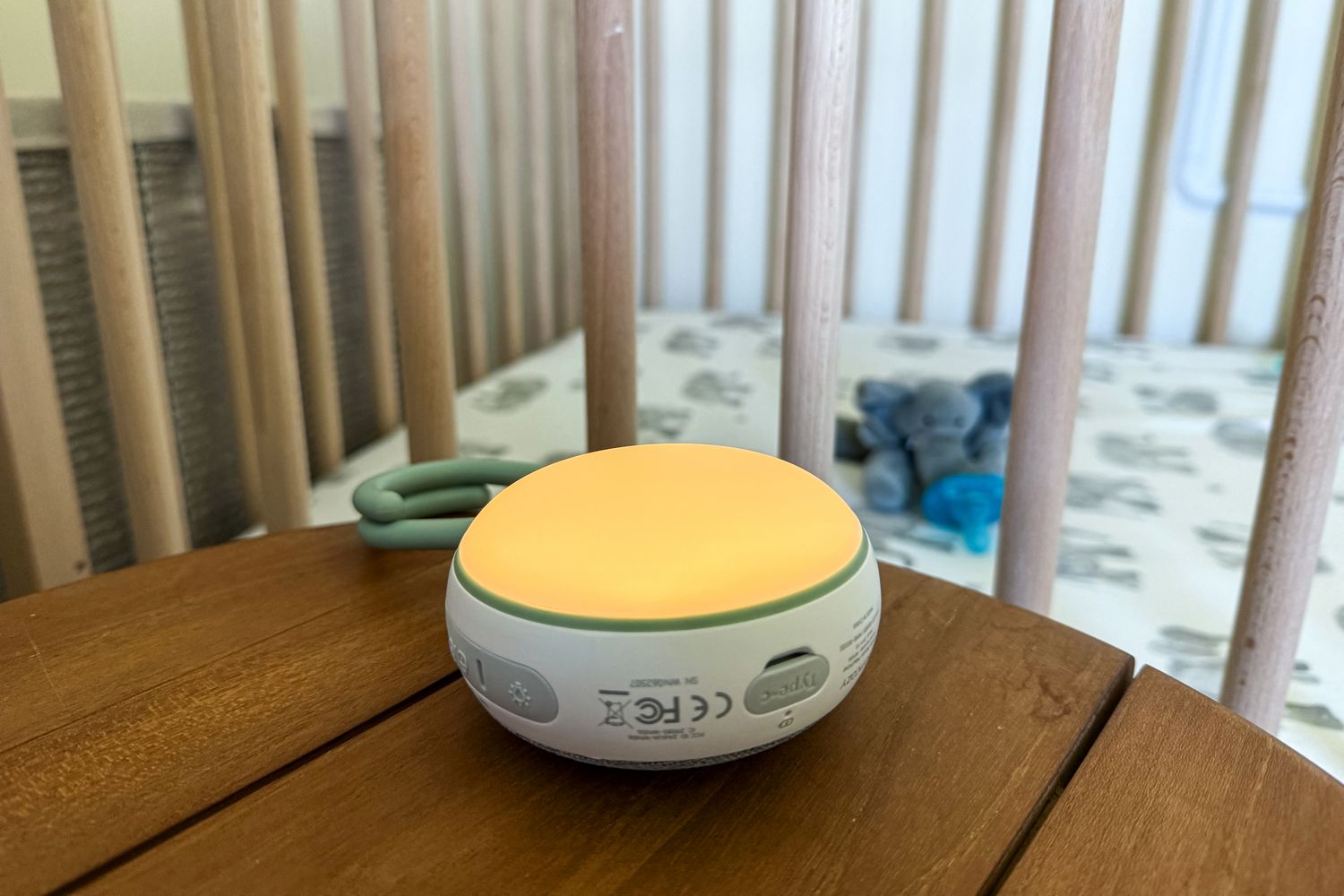
Sound machines can be a real help for baby sleep, especially in busy homes, apartments, shared bedrooms, or noisy city buildings. A steady background sound can cover sudden noises like doors closing, traffic outside, older siblings playing, neighbors moving around, or a dog barking. For some babies, that steady sound makes the sleep space feel calmer and more predictable.
But a sound machine is not magic, and it should not be used carelessly. The best sound machine is not the loudest one, the fanciest one, or the one with the most settings. The best choice is one that gives gentle, steady sound at a safe volume, sits far away from the baby’s head, and supports a simple sleep routine without becoming the only way your baby can sleep.
Parents do not need to make baby sleep complicated. A sound machine can be one helpful tool, but it should work alongside safe sleep basics: a firm, flat sleep surface, baby on their back, and a clear crib or bassinet with no loose items.
What a Sound Machine Actually Does
A baby sound machine does not force a baby to sleep. Instead, it helps create a more consistent sound environment. This can be useful because babies may wake when the room goes from quiet to suddenly loud. A steady background sound can make outside noises less noticeable.
For example, if your baby is sleeping in a bedroom near a hallway, a white noise machine may soften the sound of footsteps. If your apartment faces a busy street, it may help cover traffic. If you live in a small home, it may make normal family noise feel less sharp.
This can be especially helpful for families without a separate nursery. Parents setting up a baby sleep space in a shared bedroom can also read more ideas on the Sleep & Nursery page.
Choose Steady Sounds Over Busy Sounds
Not every sound on a machine is helpful for sleep. Some machines include lullabies, animal sounds, heartbeat sounds, ocean waves, rain, fan noise, brown noise, pink noise, and white noise. The best option is usually a steady sound that does not change too much.
A sound that suddenly loops, clicks, changes volume, or has dramatic waves can wake a baby instead of helping them stay asleep. If an ocean sound has loud crashing waves, it may be too uneven. If a lullaby changes notes often, it may feel more like entertainment than background sound.
Many parents find fan noise, soft white noise, pink noise, or low steady hums easier to use. The goal is not to create a concert. The goal is to make the room feel consistent.
Volume Matters More Than Features
Volume is the most important part of safe sound machine use. Some baby sound machines can become louder than parents realize, especially when placed near the crib. A sound that seems “not too loud” from across the room may be much louder near a baby’s ears.
HealthyChildren.org from the American Academy of Pediatrics warns that some infant sleep machines can produce hazardous noise levels and recommends placing the machine as far away from the baby’s head as possible and using it only for a short time. You can read more in their guide on how noise affects children.
A simple rule is to use the lowest volume that still helps. If you can clearly hear the machine outside the room with the door closed, it may be louder than needed. If you need to raise your voice over it, it is definitely too loud.
Keep the Machine Away From the Crib
A sound machine should never be inside the crib, bassinet, or play yard. It should not be attached right next to the baby’s head either. Place it across the room or as far from the sleep space as practical.
A study published in Pediatrics on infant sleep machines and sound pressure levels found that some machines could produce high sound levels, especially at close distances and maximum volume. In normal language, distance helps. The farther the machine is from the baby, the less intense the sound is at the baby’s ear.
Do not place the machine on the crib rail, inside the crib, under the bassinet, or right beside the baby’s head. Also keep cords away from the crib. Cords should never be within reach of a baby.
For more guidance on choosing safer baby products and avoiding unsafe sleep extras, visit the Safe Baby Products page.
Use a Timer When Possible
Some babies do well with a sound machine only during the first part of sleep. A timer can help the sound turn off after the baby settles. This may reduce unnecessary sound exposure and prevent the machine from running all night if it is not needed.
A timer is not required for every family, but it is a useful feature. You can try 30, 45, or 60 minutes and see whether your baby continues sleeping. Some babies wake when the sound stops suddenly, so a gradual fade-out feature can be helpful if the machine has one.
If your baby sleeps better with the machine on longer, keep the volume low and the machine far away. The key is not just how long it runs, but how loud it is and where it is placed.
Check the Sound Level in a Practical Way
Parents do not need to become sound engineers, but a basic sound check can help. Stand near the baby’s sleep space and listen. The sound should be soft background noise, not a loud room-filling noise.
Some parents use a phone sound meter app for a rough check. The CDC/NIOSH also provides information about the NIOSH Sound Level Meter App, which can help people understand noise levels. A phone app may not be perfect like professional equipment, but it can help you notice when a machine is louder than expected.
Place the phone near where the baby’s head would be, then check the reading while the machine is running in its normal location. If the number looks high, lower the volume or move the machine farther away.
Do Not Use Sound to Cover Unsafe Sleep Problems
A sound machine should never be used to make an unsafe sleep setup seem okay. It cannot make a lounger safe for sleep. It cannot fix a soft mattress. It cannot replace safe sleep habits. It cannot make loose blankets, pillows, bumpers, or stuffed animals safe inside the crib.
Safe sleep basics still come first. Your baby should sleep on their back, on a firm and flat surface, in their own clear sleep space. The sound machine stays outside the crib and simply helps the room feel calmer.
For more safe sleep and nursery setup guidance, the Sleep & Nursery section is a helpful resource.
Sound Machines in Apartments and City Homes
Sound machines can be especially useful in apartments, shared buildings, and city homes. Traffic, sirens, upstairs neighbors, elevators, hallway sounds, and street noise can all disturb sleep. A steady sound may help soften these interruptions.
However, small spaces also make placement more important. In a studio or shared bedroom, the machine may end up closer to the baby than planned. If the room is small, keep the volume extra low. You do not need to drown out every sound. You only need a soft background layer.
If your baby sleeps in a shared room, place the machine closer to the noise source when possible instead of right beside the crib. For example, placing it near the bedroom door may help cover hallway sounds without putting it near the baby’s head.
Families living in smaller homes can find more practical ideas on the Urban Baby Life page.
Pick Simple Features Over Complicated Ones
A baby sound machine does not need to be expensive. Look for simple features that actually help:
Adjustable volume
Steady sound options
Timer setting
Easy buttons for nighttime use
Cord safety or safe battery design
No bright lights facing the baby
No small removable parts near the crib
Some machines also include night lights, app controls, wake-up lights, lullabies, or Bluetooth options. These can be useful for older children, but for babies, simple is often better. Bright lights, sudden music changes, or app problems in the middle of the night may create more stress than help.
If you use a smart sound machine, check the settings carefully. Make sure it does not suddenly play a loud notification, alarm, or different sound while the baby is sleeping.
Avoid Using Loud White Noise for Every Problem
White noise can help, but it should not be the answer to every sleep challenge. If your baby is hungry, uncomfortable, too warm, too cold, overstimulated, or needs a diaper change, louder sound is not the solution.
If your baby keeps waking, check the basics first. Is the room temperature comfortable? Is the sleep space safe? Is the baby dressed appropriately? Is the sound machine too loud or too close? Is the baby’s bedtime routine too stimulating?
Sound should support sleep, not hide a problem.
Build a Calm Routine Around It
A sound machine works best as part of a simple routine. For example, you might dim the lights, change the diaper, feed the baby, place the baby in the crib or bassinet, turn on the sound machine at a low volume, and leave the space calm.
Over time, the steady sound can become a sleep cue. The baby starts to understand that this sound means rest time. Keep the routine simple and repeatable. Babies do not need a long performance before bed. They need consistency.
Final Thoughts
Sound machines can actually help babies sleep when they are used thoughtfully. They can soften household noise, make apartments feel calmer, and support a simple bedtime routine. But safe use matters.
Choose a steady sound. Keep the volume low. Place the machine far from the baby’s head. Keep cords away from the crib. Use a timer if it works for your family. Never place the machine inside the sleep space, and never use sound as a replacement for safe sleep basics.
The best sound machine is not the loudest one. It is the one that quietly supports a safer, calmer sleep environment. For more practical baby safety tips, visit the Trusted For Baby Blog and explore more parent-friendly guides for sleep, nursery setup, feeding, and everyday baby care.