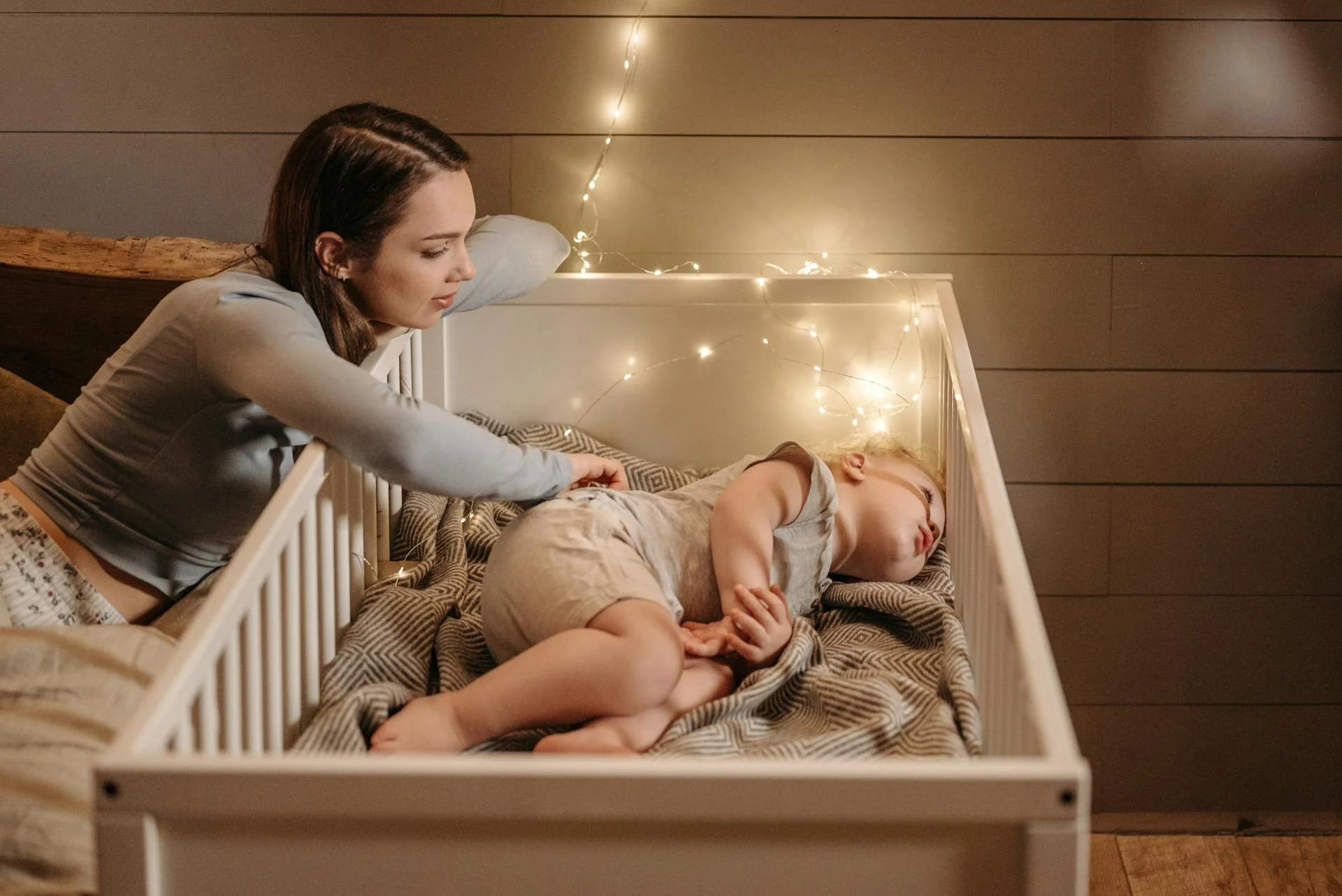
A calming sleep space does not need to look expensive, styled, or perfect. Babies do not need a nursery filled with matching furniture, soft pillows, heavy blankets, wall shelves, and decorative extras. In fact, the simplest baby sleep spaces are often the safest and easiest to maintain.
A calm sleep space is really about three things: safety, consistency, and comfort. Safety means your baby has a firm, flat, clear place to sleep. Consistency means the sleep area feels familiar each time. Comfort means the room is not too bright, too noisy, too hot, too cold, too cluttered, or filled with strong smells.
The simplest way to create a calming sleep space is to remove what your baby does not need. Instead of adding more products, start by making the room quieter, cleaner, softer, and more predictable.
Start With a Clear Sleep Surface
The most important part of a calming sleep space is the sleep surface itself. Your baby should sleep on their back, on a firm and flat mattress, in a crib, bassinet, or play yard designed for infant sleep. The mattress should have a fitted sheet and nothing else.
The American Academy of Pediatrics safe sleep guidance recommends a firm, flat sleep surface and no soft objects or loose bedding in the baby’s sleep area. That means no pillows, blankets, bumpers, stuffed animals, loungers, sleep positioners, or decorative cushions in the crib.
A clear crib may look plain, but it is not missing anything. It is doing exactly what a baby sleep space should do. It gives your baby room to rest without extra items that could create risk or collect dust.
For more practical baby sleep setup ideas, visit the Sleep & Nursery section.
Choose One Safe Sleep Spot
A calming sleep space works best when your baby has one main place for sleep. This could be a crib in the bedroom, a bassinet beside your bed, or a play yard in a safe corner. The location does not need to be large. It just needs to be consistent and safe.
Try not to move your baby between too many sleep surfaces unless necessary. If naps happen in one unsafe place, bedtime happens somewhere else, and short rests happen on pillows or loungers, sleep becomes less predictable and less safe. A baby should not sleep on couches, adult beds, nursing pillows, swings, or bouncers.
The CDC safe sleep advice also recommends placing babies on their backs on a firm, flat sleep surface and keeping soft bedding out of the sleep area. Keeping one simple sleep spot helps make that advice easier to follow every day.
Keep the Area Visually Calm
Babies do not need a busy nursery wall to sleep well. A calming sleep space should not feel overstimulating. Too many bright colors, flashing lights, hanging toys, moving decorations, or noisy objects near the crib can make the room feel more active than restful.
Choose simple colors and soft lighting when possible. Keep the wall near the crib clean and uncluttered. If you use art, place it safely away from the crib and make sure it is secure. Avoid heavy frames, shelves, mirrors, or decor directly above the baby’s sleep area.
A calm room does not have to be boring. It can still feel warm and personal. The key is to keep the crib area simple and avoid turning the baby’s sleep space into a display area.
Use Soft Light at Night
Bright overhead lights can make nighttime feeding and diaper changes feel more awake than necessary. A soft lamp or dim night light can help you see without making the whole room feel daytime-bright.
Place the light somewhere useful but safe. Keep cords away from the crib, bassinet, changing area, and anywhere the baby may reach later. Avoid lights that shine directly into the baby’s eyes. A warm, gentle light usually feels calmer than a harsh bright light.
Try to keep nighttime interactions quiet and simple. Feed, change, soothe, and return the baby to the sleep space. The room should send the message that night is for rest.
Reduce Sudden Noise
A completely silent room is not always realistic, especially in apartments, shared homes, or city buildings. The goal is not perfect silence. The goal is fewer sudden changes.
A sound machine can help if used safely. Choose a steady sound, keep the volume low, and place the machine far from the baby’s head. It should not be inside the crib or attached to the crib rail. The sound should feel like soft background noise, not a loud attempt to block everything.
You can also reduce noise naturally with rugs, fabric storage bins, soft curtains placed safely away from the crib, and quiet door pads. These small changes can make a room feel less echoey without adding anything unsafe to the sleep area.
For more apartment-friendly baby tips, visit the Urban Baby Life page.
Keep the Temperature Comfortable
A calming sleep space should not feel too hot or too cold. Babies should be dressed for the room, not buried under blankets. Loose blankets should stay out of the crib. If your baby needs warmth, use safe sleep clothing such as a properly fitted sleep sack.
Check your baby’s chest, back, or neck to understand their temperature. Hands and feet can feel cool even when a baby is comfortable. If your baby is sweating, has damp hair, or feels hot on the chest, they may be too warm.
Avoid hats during indoor sleep unless your pediatrician gives specific medical advice. Keep the baby’s head and face uncovered during sleep.
Avoid Strong Scents
A calming room should smell clean, not perfumed. Strong candles, plug-ins, air fresheners, incense, essential oil diffusers, and heavily scented sprays can make a small sleep space feel overwhelming. Babies spend many hours close to sheets, clothing, and mattresses, so gentle choices matter.
The EPA indoor environment guidance recommends minimizing indoor use of perfumes, cleaners, pesticides, and other household chemical products, and ventilating when cleaning or using products that may affect indoor air.
For a baby sleep space, simple is better. Use gentle cleaning products, wash bedding regularly, ventilate when outdoor air is good, and avoid spraying fragrance near the crib. Clean air does not need a strong smell.
For more home safety ideas, visit the Home Toxin Reduction page.
Organize Only What You Need Nearby
Clutter makes a room feel busy. It also makes nighttime care harder. Keep the baby sleep area simple by storing only the items you truly need nearby.
A small basket or drawer can hold diapers, wipes, burp cloths, and one clean sleeper. Feeding supplies can stay in a separate basket or cart. Extra clothes, backup diapers, toys, and blankets can be stored away from the crib.
Do not store anything inside the crib, even during the day. If the crib becomes a laundry pile or storage spot, items may accidentally be left behind when the baby sleeps.
For product organization and choosing only useful items, visit the Safe Baby Products guide.
Choose Bedding Carefully
Baby bedding should be simple. A fitted sheet is the main item your baby needs on the mattress. It should fit tightly and stay smooth. Loose sheets, thick mattress pads, plush toppers, quilts, pillows, and comforters do not belong in the sleep space.
Have a few clean fitted sheets ready so you are not tempted to use towels, adult sheets, or blankets after a late-night leak. Wash sheets with a gentle detergent, dry them fully, and store them away from dust, moisture, and strong smells.
A clean fitted sheet and safe sleep clothing are usually enough for a comfortable baby sleep setup.
Create a Simple Pre-Sleep Routine
A calming sleep space becomes more effective when paired with a simple routine. This does not need to be long or complicated. Babies often do well with repeated steps that happen in the same order.
A simple routine may look like this: dim the light, change the diaper, feed the baby, burp gently, turn on soft background sound if using it, place the baby on their back in the crib or bassinet, and keep the room calm.
The routine matters because it helps the sleep space feel familiar. Over time, the room, lighting, sound, and repeated steps become signals that rest is coming.
Remove Instead of Add
When parents want better sleep, it is tempting to buy more things: more blankets, more gadgets, more toys, more pillows, more lighting, more products. But a calming baby sleep space usually improves when you remove things.
Remove clutter from the crib. Remove strong smells. Remove bright lights. Remove loud toys. Remove unsafe sleep products. Remove anything hanging too close to the crib. Remove extra bedding.
What remains should be simple: a safe sleep surface, soft lighting, gentle sound if needed, comfortable clothing, and a peaceful routine.
Final Thoughts
The simplest way to create a calming sleep space is to keep it safe, clear, and consistent. Your baby does not need a fancy nursery or a long list of products. They need a firm, flat mattress, a fitted sheet, a clear crib, comfortable sleep clothing, and a room that feels calm enough for rest.
Focus on what matters most: safe sleep position, clean air, low clutter, soft light, gentle sound, and a predictable routine. Keep decorations outside the crib. Keep bedding simple. Keep the sleep area free from loose items. Keep the room comfortable without overheating.
A calming sleep space is not created by adding more. It is created by choosing less, more carefully. For more practical baby safety and nursery guides, visit the Trusted For Baby Blog and explore simple ways to make baby care safer and easier at home.